Showing posts with label Music. Show all posts

Tuesday, September 3, 2013

DUAL ALBUM REVIEW: Goodie Mob - Age Against The Machine

Goodie Mob - Age Against The Machine
Today we have a special treat for you called a Dual Review. Occasionally, multiple contributors from IV have something to say about an album/movie/book/game, etc. and rather than just letting one person take all the opinionated glory, we decided to combine our thoughts into one piece. We were going to call it a Duel Review, but since Trey-K and I pretty much agree with each other’s conclusions, that won’t be necessary (this time…).

In full disclosure, you should know that I am a white, bearded, thirty-something male with musical roots mostly in rock and metal. Since Trey and I have been friends for as long as I can remember, some of our musical influences have rubbed off on each other. Dungeon Family’s Even in Darkness was the first hip-hop album that really struck a chord with me. Rappers were actually saying something credible, with eloquence, and without dropping the F-Bomb or the N-Word every other syllable. And on top of that, the songs were catchy, with each member’s style so distinctive, I could actually tell them apart.

I have such fond memories of riding around with Trey and listening to that album, I’ve always wanted to hear more from the same group. Well, here we are over a decade later with a new Goodie Mob album, it’s approximately one-fourth of the Dungeon Family members I care about, so what the hell, I’ll take it.

After one listen through of Age Against the Machine, I felt that it was both better than I expected and also disappointing. My disappointment comes from something that Trey mentions as well: the interludes/skits/mini songs. In rock, it’s best to have a tight knit album, a collection of solid songs from start to finish. Anything else in between is what we call filler. Filler breaks up the album, ruins the flow, like bad grammar pulls you out of a good book. On AATM, we get a collection of good songs crippled by filler. I feel like there is a solid EP right in the middle of this record with the rest being unfinished tracks or Cee-Lo solo songs. It’s possible that at the end of the Mob’s studio time in Jamaica, they just gathered what they had and splorked it onto the record with no concern for completeness or flow. It’s a shame because the good songs on here really are good.

I’m impressed how well Cee-Lo fits into this album, considering his recently found pop status. He doesn’t feel out of place when all the members are on the same track. He doesn’t shine above the rest or stick out like, “Oh, there’s Cee-Lo” as something separate from “those other guys”. It feels very natural and it’s good to hear Cee-Lo rapping again, even though he is an astoundingly good singer. There are a couple of instances where I feel he may have snuck into the studio at night and inserted some of his own solo tracks into the mix. While not bad, those songs do stand apart and don’t gel quite right with the album as whole, furthering the overall disjointed vibe.

The production here is excellent and I’m glad to see from a prog-rock perspective that these guys take some risks with the tracks, changing up rhythms and using odd sounds here and there. It’s an impressive effort that keeps the good songs from sounding too same-y.

At the end of the day, I’m glad I got the album. Big Rube’s voice on the intro track transported me back to 2001 and made me relieved that even as I get older and everything changes, some things still remain to take me back there again. I like this album purely based on nostalgia, but I also recognize the moments of actual quality that shine through from time to time. If you aren’t a fan of hip-hop, it probably won’t sway your opinion much, but you could do a lot worse. You could do a lot worse.

-Attikuh Isley

And now on to Trey-K and the main event:

Along with Attikuh Isley, anyone who knows me can say that I am a big fan of the Dungeon Family. Any release from them or even their affiliates will get my attention. Their track record is something that no one can dispute. The hip hop collective are responsible for some of the best albums in not just rap, but in music PERIOD.  OutKast, in particular, has one of the best album catalogs in rap music, but even as great as their albums are, I would put Goodie Mob's debut album Soul Food over all of their albums. When I say this to others, I get looks of shock and concern that I have gone crazy, considering how much of an OutKast fan I am.  Nevertheless, I stand by it.  What Goodie Mob crafted with their first album was a stripped down, raw portrait of the South, specifically Atlanta, filled with soulful beats and rhymes speaking on social consciousness, paranoia, spirituality, poverty, and even food. When music fans talk about hip hop soul and do NOT mention this album as part of that genre, they should have their mouths wired shut and their ear drums popped because Soul Food defines how soul music can mix with hip hop.  With this album and their follow-up Still Standing, the quartet of Cee-Lo, Khujo, T-Mo, and Big Gipp showed that the South not only had folks that can rhyme, but also that there was more to Southern rap than strip club, shake-your-booty music.

Tuesday, August 13, 2013

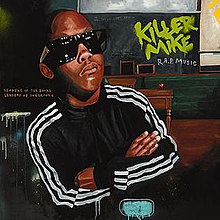
ALBUM REVIEW: Killer Mike - R.A.P. Music

I've never really had a religious experience, in a religious place.
Closest I've ever come to seeing or feeling God is listening to rap music.  Rap music is my religion.  Amen.

These days, there are rarely words that resonate with me perfectly.  To me, Michael Render's words at the beginning of the title track is the truest shit I ever heard.  To some, it may be hard to understand, especially if you are not a big fan of rap.  Listening to rap growing up provided sympathy, compassion, understanding, comfort, relaxation, community - well, pretty much everything that religion provides for others.  When you have preachers, parents, or both telling you what you should do as if they have never done it, rap always spoke to me as if it understood how I felt and spoke to me with honesty.  Rap did not judge me.  In fact, it empowered me to do the scariest thing to do these days - be myself.  At the end of the day, any music genre can be this to others, and it probably is.  Unfortunately, of all music genres, rap music always receives harsh criticism from in the media and politics, many of whom simply criticize out of their own ignorance, whether intentional or not, of hip hop culture. Now, there is definitely some rap out there that lacks some integrity and creativity, but it is always the music that has integrity that lasts the test of time.  With his sixth album entitled R.A.P. Music (Rebellious African People Music),  Michael Render aka Killer Mike has delivered such an album.

First, let me apologize again for being mad, mad late on this review.  In fact, I deserve to poke my eyes out with toothpicks.  When I was writing the review for his last album, Killer Mike had already released this album over 6 months beforehand.  This album should not have slipped under my radar but it did.  Once again, however, it's better late than never.  What changed between Pl3dge and R.A.P. Music for Killer Mike?  The biggest change is that Killer Mike elected to have underground hero and producer El-P handle all the beats for this album.  I was definitely a little put off by that, especially with how I felt Pl3dge was Mike's most complete album production-wise with more than one producer behind the boards.  In addition, I was not sure whether El-P's offbeat style would match with Mike's streetwise, aggressive rhetoric.  However, I remember reading about the same skepticism when Ice Cube enlisted the Bomb Squad to produce his first solo album after leaving N.W.A.  It ended up working so well that people were still clamoring for them to collaborate again, and with R.A.P. Music, it is no different.

Killer Mike waste no time with the opening track "Big Beast" featuring Bun B, T.I. and Trouble, opening the album with a fury and intensity that we have not heard since Amerikkka Most Wanted.  Man, I wish other artists had the guts to kick off an album like this:


Hardcore G shit, homie I don't play around 
Ain't shit sweet 'bout the Peach, this Atlanta, clown 
Home of the dealers and the strippers in the clubs doe 
Catch you comin out that Magic City with a snub, hoe 
Lurkin in the club, o' tourists muh'fuckers 
Welcome to Atlanta - up the jewelry, muh'fucker! 
These monkey niggaz lookin for some Luda and Jermaine 
And all that nigga found was a Ruger and some pain
...
I know some dumb country niggaz but them niggaz ain't weak
Know they dress and look the part but them niggaz ain't G
I don't make dance music, this is R.A.P.
Opposite, of that sucka shit they play on TV

Both Bun B and especially T.I. provide stellar verses, and Trouble nails the chorus.  What is most surprising is El-P's production.  The beat is uptempo, hits hard, and perfectly compliments Mike as he puts a lyrical beatdown on the listener.  Any doubt on the Killer Mike/El-P chemistry is now gone, even if it might fall short at some point.  Fortunately, it never does.  The following track "Untitled" featuring Scar has El-P slowing things down with a deep bass pattern alternating between two octaves and congas drumming in the background.  The beat itself is hypnotizing, but Mike makes sure his drops something to chew on as well.

Tuesday, July 16, 2013

AUDIO SHAKEDOWN - Volume 11

Greetings, dear readers and welcome once again to the one and only Audio Shakedown. It's been a while since the last installment and I've been gathering bits of writing here and there as time has passed, so there's no real theme to the group other than that I've been cramming them all into my head with furious abandon over the past month or two. Listen, read, and enjoy.

Tom Waits - Orphans: Brawlers, Bawlers, and Bastards - Tom Waits is an American treasure as incredible and irreplaceable as the Grand Canyon, and if you listen to the 56 songs that comprise the Orphans collection, you'll have a reasonable idea why. The Brawlers disc contains Mr. Waits' careening rock and roll and primal blues stomp, and for my money probably edges out the other two discs, as great as they are. Bawlers contains love songs and assorted weepers, which when done by Tom Waits are potent indeed. Many musicians have a rock side and a ballad side, and most collections could stop there, but Waits is no ordinary musician, so the Bastards disc is necessary, as it showcases his love of oddball spoken word, shambling beat poetry, and bizarre raconteurship. Considering his career spans four decades now, Orphans is not an accurate picture of his entire oeuvre, but it is a fascinating glimpse into a musical mind like no other.

Jerry Lee Lewis - Jerry Rocks - Everyone knows the amazing rock and roll sides that the Killer released on the Sun label in the fifties, but when a compilation of his work is released, it always splits the running time between the piano-burning rockers and the somewhat homogenous country material he released around the same time (Sorry, die-hard Lewis fans, but it's true, if you skip through his country weepers, you hear the exact same four note walkup to the opening chord over and over again, and the rest of those songs usually fare no better where originality is concerned.) But this Bear Family Records collection dispenses with the downtempo business and gives you all the rockers, including some material that rarely shows up on comps. There are some great covers, all the originals you know and love, and even some upbeat country numbers. I'd been looking for a compilation like this for some time, and it definitely delivers.

Voodoo Blues - The Devil Within - A while back I thought, "It seems like there should be a collection of older blues songs about the influence of voodoo and folk magic on black culture in the south." Thirty seconds later, a Google search confirmed my genius. There are a few of them, actually, but this two-disc collection seems to be the most enjoyable. It has a nice balance of material, from the older, creepier material (Robert Johnson, Sam Hopkins, Skip James), to the newer, more tongue-in-cheek sorts of songs, (Howlin' Wolf, Screamin' Jay Hawkins). The range of approaches to the subject matter is beneficial, since a narrow focus on both style and theme could easily render the proceedings overly homogenous, a trap that some of the other collections in this vein fall into.

Them - Them - People frequently overlook Them when remembering great mid-60's bands, but it's fascinating to hear Van Morrison in his rock and roll wild man days. On their self-titled debut, the band occupy the space (both temporally and sonically) between Howlin' Wolf-style Chicago blues and The Stooges' down and dirty ruckus, which frequently ends up sounding similar to the Rolling Stones, an equation that makes musical sense, really. This album is really a perfect status report of mid-decade rock and roll, from the organ heavy "I'm Gonna Dress in Black" that gives The Animals' "House of the Rising Sun" a run for its money, to the incomparable ode to sex "Gloria," which has been covered by everyone from The Doors to Patti Smith. There's no reason this album shouldn't be talked about with the same reverence as Aftermath, Animalisms, or The Kink Kontroversy.

Toad the Wet Sprocket - Dulcinea - It's easy to lose sight of Toad the Wet Sprocket, a statement that was true even in the mid-90's. 1994 was a banner year for musical sadness, but Toad the Wet Sprocket tended to be drowned out by their more histrionic peers in alternative rock. The band's gimmick was that they had no gimmick (other than the band name, which they pulled from an old Monty Python sketch, though that is neither here nor there where their music is concerned). They played well, but had no showiness about them. They weren't the loudest or fastest, or even most miserable. In fact, compared to the wailings of other bands at the time, the glum nature of these songs seems composed and almost elegant. Toad's strong point is that they know their way around a melody, and they crafted solid songs to support them, as is evident here on Dulcinea. It didn't necessarily make them the most newsworthy band, but it did result in several albums worth of great music. Sometimes I need nothing more than their jangly guitars and Glen Phillips' fragile voice, bolstered by the harmonies that frequently crop up behind it in their songs.

Carousell - Black Swallow and Other Songs - Carousell is one of the many guises (A Broken Consort, Riftmusic, *AR, etc.) of Richard Skelton, a UK-based composer of beautiful droning songs made primarily with bowed strings of various sorts. With each new appellation, Skelton displays a different focus on his signature sound, and with that in mind, it appears that Carousell is his most conventional version yet, since there's identifiable notes and very nearly a discernible rhythm to some of the proceedings, unlike earlier recordings. The instrumentation is more diverse as well, including piano, strings both bowed and plucked, what sounds like field recordings, and the occasional whispery, wordless voice, courtesy of wife Autumn Richardson. This record is gorgeous, and while it does cleave closely to his established atmosphere of arboreal melancholy, the compositions here are more lush than his usually spare (though equally compelling) style. The result is a collection of soundscapes that manage to be both earthy and ethereal at once, like being able to touch a memory. This is not a record for everyone (a fact Skelton must understand, since the initial run of discs was limited to 100), and so much the better, because it can live like a secret with those who understand its value.

I'll end this one with a film recommendation (it's musically based, so I think it falls under our focus here). The new Mudhoney documentary I'm Now is an excellent look at a band that's too often forgotten when people talk about early 90's grunge. They outlasted pretty much everyone, even through drug addiction and changing styles, and it's great to be able to hear all of the original members tell the story as they lived it.

Tuesday, June 18, 2013

ALBUM REVIEW: Kanye West - Yeezus

[Yeezus]


There are 3 rules that I try to reconcile when it comes to reviewing albums:

1) Music is art, and it takes time to appreciate it in some cases.
2) Personal feelings about the artist must be put aside to fairly review the album.
3) The first impression is usually the right one in most situations.

Since I have been writing reviews, no artist has tested these rules more than Kanye West.  In my younger days, I passed on his earlier albums out of disgust for his unrelenting arrogance and ridiculous obsession with the limelight.  It was not until my wife forced me to listen to his first two albums that I realized that he is a talented artist.  He does deserve the accolades he receives for his music because he does have a great ear for music and can have some intriguing rhymes every now and then.  Of course, we all knew his talent from his production work for artists like Jay-Z, T.I., Common, Mos Def, and Alicia Keys.  Unfortunately, as his career went on, Kanye became more well known for controversy rather than music.  Sometimes it was courageous (his rant on George Bush and Hurricane Katrina relief in 2005); sometimes it was tragic (his mother's death in 2007 due to complications from plastic surgery), and sometimes it was completely ridiculous (his impromptu speech during Taylor Swift's acceptance speech at the VMA's a couple years ago).  Either way, controversy continues to follow him.  For his fans and for critics, controversy has not interfered with the quality of music, for his first 5 albums all had critical and commercial appeal worldwide.

However, critics were not as happy with his performance on the 2012's Cruel Summer compilation album.  The once-potent Kanye lacked focus and inspiration.  Much of the lyrical content fed into the glamorous superstar life without the typical introspective conflict that we are accustomed to hearing from Mr. West.  The radio loved a lot of the songs on off the album, but some fans hoped that his next album would rectify the shortcomings of Cruel Summer and put Kanye back into people's hearts, minds, and ears.  Kanye has shown his ability for redemption: after the auto-tune love-fest that 2008's 808's and Heartbreaks was, his 2010 follow-up My Beautiful Dark Twisted Fantasy was musical masterpiece and a trendsetter for rap music after its release.   People believe that Kanye will come with that fire.  His high-profile relationship with paparazzi fiend Kim Kardashian and his pending fatherhood would prompt him to change the game again and rule the airwaves, or at least not distract him from doing it.  Fans have faith in Kanye just like Christians have faith in Jesus.  Hmm, maybe that is why Kanye's new album is titled Yeezus.  He has been pretty consistent among all the rap artists who came out in the 21th Century, so why would he let us down now?

I don't know why, but for me, he did.  I have listened to his album 3 times this past weekend, and each time it has felt like a chore rather than a pleasure.  See what I am doing here?  I am trying to follow Rule #1 and give it a few listens to sink in.  As much as I loathe Kanye for some of the crap he says and does in the media, I know that he has the talent to make good albums.  He deserve a fair listen.  See what I am doing here?  Rule #2 is creeping in.  At the end of the day, Rule #3 triumphs over all: my first impression of the album wins.  I am not feeling it.

I would describe this album as the worst of 808's and Heartbreaks mixed with an half-ass attempt at trip-hop.  It is a shame that his collaborations with Daft Punk on 5 tracks are wasted here.  They do well on "Black Skinhead" and "New Slaves," which happen to be the songs he performed on SNL last month.  The latter is probably my favorite track of the album, and it is far from the best song that I have heard from Kanye (Killer Mike and other artists been saying what Kanye was talking about for a minute).  Still, the grating sounds and explicit imagery makes Yeezus a tough listen.  Like I said, I listened to the album 3 times before I started this review and am currently listening to it now.  I will admit that some songs sound better on further listens.  The king Louie-assisted track "Send It Up" has a chorus that will creep up on you and get stuck in your head, and "Bound 2" sounds like a solid throwaway from Kanye's third album Graduation  (I mean that in a good way).  However, tracks like "Blood On The Leaves" shows how singing with Auto-tune can be a detriment to good song rather than a benefit (and I do not approve of him ripping off the chorus for Snoop Dogg's "Down For My N's").  Even in it better moments, there is nothing pulling me back to this record.  In fact, I have a hard time believing that this was actually the album after my first listen.  I kept believing that this version was for the bootleggers, and a better version would be released on the scheduled release date.  Well, after listening to the album on Spotify today, my beliefs were incorrect.

Perhaps I should not have considered Cruel Summer part of Kanye's catalog.  If not, I could listen to Yeezus with less skepticism and more of an open mind.  I appreciate artists that push their own boundaries as well as the boundaries of music in general.  When everyone tends to play it safe, especially with hip-hop, hearing an artist establishing their own lane and trying to set trends is refreshing.  The main reason why artists do not flex their creative muscles is because they run the risk of going so far into another zone that they simultaneously fail to catch the ears of new fans and alienate their core fan base.  It is a big risk/big reward decision, and it sometimes does not work.  Judging from the reaction that Yeezus so far, most of his fans and critics still have his back and are supporting this album.  I am sure that he lost a few, though, and for better or worse, Kanye does not seem too care.  So be it.  After looking this review over, I realized that similar to Kanye, I am contradicting myself with acknowledging delayed appreciation for art but going with my initial impression with this album.  Well, contradictions seemed to be the mantra for Kanye's career, so it is fitting for me to do the same.  This also could be Kanye's point with Yeezus - we strive to be the best but we end up falling short most of the time.  Interesting.  Still, I have a feeling that Kanye will bring me back on his next release, but for Yeezus, I gotta pass.

Sunday, June 16, 2013

ALBUM REVIEW: Kendrick Lamar - Good Kid, M.A.A.D City


Kendrick Lamar has some balls.  He had already developed a huge buzz through his mixtapes and release an independent album Section 80 in 2011 that was critically acclaimed.  His label Top Dawg Entertainment inked a distribution deal with Dr. Dre's Aftermath and Interscope Records, allowing him to reach wider audience.  Hip hop mainstays Lil Wayne, Game, and Dr. Dre endorsed him as the "next big thing" in rap.  On top of that, Dr. Dre was going to add his magic touch to his first major label release as executive producer.  With all these elements lined up, Kendrick could have just made one hot single, get a couple Dr. Dre beats on there, and coast through the rest of the CD while benefiting off his powerful connections and endorsements.  It sounds so easy, but what does Kendrick decide to do?  He decides to make his major label debut a concept album.

Good Kid, M.A.A.D. City serves as a day-in-the-life of Kendrick Lamar as a seventeen year old kid living in Compton, California.  The album chronicles the coming-of-age of Kendrick as lust, comedy, crime, and tragedy shapes his development as the man he is today.  Well, perhaps the coming-of-age story has been done many times in multiple mediums.  Still, even though the story is not new, getting to the beginning to the end can still be entertaining.  The question here is this: can Kendrick Lamar release a concept album that tells an engaging, enjoyable story but still be accessible to the average fan who is not familiar with K. Dot's previous work?  Indeed.

The most impressive aspect of this album is that despite having a larger profile from being released on a major label, it is clearly Kendrick's show.  There is not a track on the album where Kendrick Lamar takes a backseat to the production or the guest artists and uses them to keep the listeners' interest.  It seems easy for Kendrick to hop into the backseat based on the people involved in the album.  Pharell Williams of the Neptunes adds his signature sound and vocals to the track "Good Kid."  Just Blaze puts together a California anthem with the track "Compton."  T-Minus comes through with the infectious hit single "Swimming Pools (Drank)." Scoop DeVille laces two of the tightest tracks of last year with "Poetic Justice" featuring Drake and "The Recipe."  Many of the other producers such as Soundwave and DJ Dahi and are not as well known but will soon be in demand due to their work on "Bitch, Don't Kill My Vibe" and "Money Trees" featuring Jay Rock, respectively.  Surprisingly, Dr. Dre has no direct involvement in any tracks but makes two guest appearances on the aforementioned "Compton" and "The Recipe."  Another west coast rap legend MC Eiht makes an unexpected but satisfying appearance on "M.A.A.D City," which should make a new generation of rap fans say "geah" as if it is 1992 all over again.  Nevertheless, Kendrick makes its clear that he is the main attraction.  All of the contributors are in the passenger seat while Kendrick is behind the wheel.  Despite what they bring, Kendrick Lamar controls where the album is going.


What probably helps in Kendrick's command over the album is his clear vision and its flawless execution on the album.  He seems to have thought out every aspect in how the album is put together, and it makes every listen better each time.  I am always a sucker for the subtle moments that make an album intriguing, and there are plenty of them: the interplay of the music and K Dot's lyrics in "Sing About Me, Dying of Thirst," using a snippet of the opening track "Sherane aka Master Splinter's Daughter" to bring the story back to the beginning at the end of "Poetic Justice," the transition of K Dot getting into the backseat of his friend's car before moving to the track "Backseat Freestyle" - it is all there.  Even the interludes demand replay (the interludes with Kendrick's parents are definitely the highlights), and unlike some albums, the interludes help keep the album together instead of shaking up the album's flow.  No album that I have heard since OutKast's Aquemini has been able to achieve this feat so convincingly, and Kendrick should consider this a victory in itself.

Fortunately, Kendrick does not settle for just having an album that comes together musically.  He does not hit you with tongue-twisting, deep metaphors and punchlines.  However, Kendrick Lamar uses his words to weave his tale of youthful angst and loss of innocence to put you right there in the action.  The album cover states that the album is a short film by Kendrick Lamar, and that is exactly the feeling that you receive when you play it.  The highs and lows that one feels when watching a movie is apparent despite being in audible form instead of visual form.  There are still some moments that are surprisingly insightful even when you are likely having fun with it, such as the one on "Swimming Pools (Drank):"


Now I done grew up round some people living their life in bottles 
Granddaddy had the golden flask, back stroke every day in Chicago 
Some people like the way it feels, some people wanna kill their sorrows 
Some people wanna fit in with the popular, that was my problem 
I was in a dark room, loud tunes, looking to make a vow soon 
That I'ma get fucked up, filling up my cup, I see the crowd move 
Changing by the minute, and the record on repeat 
Took a sip, then another sip, then somebody said to me 

 [Chorus] 
Nigga, why you babysitting only two or three shots? 
I'ma show you how to turn it up a notch 
First you get a swimming pool full of liquor, then you dive in it 
Pool full of liquor, then you dive in it 
I wave a few bottles, then I watch 'em all flock 
All the girls wanna play Baywatch 
I got a swimming pool full of liquor and they dive in it 
Pool full of liquor, I'ma dive in it

I am probably the only one who thinks this, but I think this song is as genius as Afroman's "Because I Got High."   Like Afroman, Kendrick makes a song that simultaneously glorifies getting drunk and criticizes getting drunk (he even calls it "poison" on the second verse).  You got to appreciate songs like these because it's so tough to get anyone to listen to a rap song with any sort of substance.  It is also tough to make a song with substance that is sonically enjoyable, and Kendrick pulled it off here.

Other artists have made similar albums, but I have not heard any rap album that was able to pull it off as well as Good Kid, M.A.A.D. City.  Kendrick's vision and courage in making this album definitely paid off, and he clearly released one of the best albums in 2012.  I have no problem recommending this album as well as the deluxe edition to any music fan, whether they like rap or not.  After fully digesting this album, I imagine that when a new crop of rappers rise up 10-15 years later, they will point to this album as one of their biggest influences in their work.  Yep, it is that good. 

Thursday, June 13, 2013

AUDIO SHAKEDOWN - Volume 10

Here we are at the tenth installment of the Audio Shakedown, or Shakedown X, if you prefer a more dramatic branding. My brain has been all over the place lately, so there's a good mix of stuff in here, though I have been spending a lot of time with some of the records from the first wave of NYC punk rock, which factors in a bit in this Shakedown. So without further ado, here's what I've been digging lately:

Black Sabbath - 13 - All the fans waiting for this record for the past year have had quite a ride. The initial excitement about a new album from the original Sabbath lineup was dampened by news of Tony Iommi's health issues and the departure of Bill Ward from the project (initially it was a "contract dispute," but later statements by Ozzy indicate that Ward's playing just wasn't up to par anymore). Then came the puzzling news that Ward's replacement was Brad Wilk from Rage Against the Machine, despite the fact that there exists a legion of drummers already playing in the Sabbath style out there in doom and sludge bands across the world. No one was sure what to expect, but the record is out and the results are in: Sabbath still rules. Producer Rick Rubin got this one just right, with the unmistakable feel of classic Black Sabbath intact, though the individual members show that they've been busy in the interim. Geezer's bass tone is thunderous, Tony's still at the top of his game, and Ozzy's vocals are great. Brad Wilk performs admirably, though if you really listen you can tell there are places where Wilk sticks with a straight ahead stomp where Ward might've made it swing a bit, but that's a non-issue, as it never becomes distracting. In the end it turns out there was no cause for concern; giants still walk the earth, and 13 is an album that Sabbath can be proud of. 

Miles Davis - Kind of Blue - Usually when something finds a massive audience, it's because it's a piece of lowest common denominator mush. But Kind of Blue is one of those very rare artifacts of human culture, an album whose appeal is so universal that they may as well just issue everyone on Earth a copy with their birth certificates. There is something built into the modal structure of the chords and leads that speaks to a deeper part of our brains. It's an ineffable alchemy, and one of the very few records where I feel pretty confident saying that if you can't find anything to enjoy here, there is something wrong with you.

Johnny Thunders and the Heartbreakers - L.A.M.F. - Despite the cachet that the New York Dolls carried in their namesake city, it's odd that the Heartbreakers' debuted to the sound of crickets initially, though the collapse of their label and their unceasing drug habits probably had something to do with it. At any rate, L.A.M.F. gradually grew through "cult status" to "essential album," which is really where it belongs, among the big names of the CBGB scene in late 70's New York. The album is trashy and raw, dealing mostly with drugs and sex, and carried the essence of the burgeoning punk rock aesthetic, thanks to members Johnny Thunders and Jerry Nolan, both of the New York Dolls, and Richard Hell, who had just left another early punk titan, Television. By the way, don't bother with the "revisited" edition of this album, with its cleaned-up production.  It's much better in its raw original form, as dirty and dangerous as the city that spawned it. 

Deafheaven - Sunbather - Sunbather is a novel brew of arty post-rock à la Godspeed or Mogwai blended with smile-free black metal, a bold move considering how unforgiving some black metal fans can be about violations of traditionalism. Deafheaven's enjoyable first record was done in a similar vein, and their mixed approach really upset the metal purists, which I always find amusing. But Sunbather, their sophomore release, represents a phenomenon that I enjoy even more: it's so good that even the purists have had to give them credit, despite their stylistic objections. Sunbather maintains an interesting atmosphere throughout, as they borrow black metal techniques but somehow manage to leave behind the icy feel that they usually evoke, instead using the same tremolo picking and minor key melodies to bring some sun into their expansive yet introspective compositions.

Patti Smith Group - Easter - Horses was the breakout album, and it's definitely excellent, but if you're looking for something with more fully realized songs, it's probably a good idea to reach for Easter. Not that Easter lacks Patti's spoken word performance, but it's where the band becomes skilled enough at their craft that they feel confident being more musical than textural. The best known track is of course "Because the Night," Smith's collaboration with Bruce Springsteen (whose influence on the track is obvious), but there are great songs all over the record. The eerie, ritualistic "Ghost Dance" is a particular favorite of mine, as is "Godspeed" a non-LP track that was included on later pressings. The religious imagery that Smith plays with over the course of the album works surprisingly well; its use is direct but not blunt. This is a diverse, challenging listen that stands as one of Smith's greatest statements.    

Motorpsycho - Little Lucid Moments - This record sounds like an extradimensional intelligence has assembled a metal band, a punk band, and a prog band, and then manipulated their minds and bodies in order to play them like an arcane puppet orchestra to attempt to communicate some vital information. The songs are twenty plus minutes long, and different sections sound like they're from different albums (some sections sound like they're made by a different species), yet there seems to be an overall sensibility knitting it all together into a cohesive whole. I feel like if I could just listen a little harder to this music, the chords would restructure themselves into instructions on how to leave this planet and join a waiting cadre of elite galactic scholars. And honestly, if none of this sounds remotely interesting to you, I'm not sure why we're even talking here.

Monday, June 3, 2013

AUDIO SHAKEDOWN - Volume 9

In this edition of the Shakedown, I'm taking the opportunity to catch up on some new (and new-ish) releases. There's been a lot of good stuff coming out, but I've been so obsessed by older music lately that I've ignored some of it for a while, an oversight which I will now rectify.

Coliseum - Sister Faith
- It doesn't seem like ten years ago that I was asked to review Coliseum's self-titled debut, but I find that I enjoy their brand of messy, wild, gruff-voiced punk as much as ever on their fourth LP, Sister Faith. At the beginning of their career, their sound was nearly off the rails, like the song might fly apart at any moment and it was only momentum that kept it all together. Even though they've tightened everything up a bit on their newer releases, the feeling is still there in the throaty distortion, heavy bass, and powerful drumming.

Queens of the Stone Age - ...Like Clockwork
- I don't agree with those who say that this is the greatest extant rock band on earth, and I'm going to be honest with you, this is the first album by QOTSA that I've found listenable since Songs for the Deaf. All the stuff in between was too unfocused and dependent on Homme's falsetto singing for me to find enjoyable. Make no mistake, though, ...Like Clockwork doesn't really sound anything like Songs for the Deaf. Homme and company have found a new approach here that borrows more from Bowie circa Aladdin Sane than you might expect, especially on the second half of the record. There are of course the much-touted guest stars, but if they hadn't been so discussed in the pre-release press, you'd probably never know they were there. This album was dangerously over-hyped, but nevertheless manages to be a surprisingly interesting release.

Alice in Chains - The Devil Put Dinosaurs Here
- I was pleasantly surprised by 2009's Black Gives Way to Blue, despite being all too willing to can it for its obvious lack of Layne Staley. That album was a reminder that Jerry Cantrell was always Alice's main composer, and was responsible for more of the band's essence than perhaps anyone else in the band. It was also a display of the admirable talents of William DuVall, who stepped in as lead singer to take the vacant spot once filled by one of the most recognizable voices in modern rock music, and ably did a job that can't have been easy. So the comeback provided some quality material, and there's more where that came from on The Devil Put Dinosaurs Here. There may not be any big surprises on the album, but the grinding distortion, phrygian-laced lead work, and vocal harmonies that we all know and love are firmly in place. Layne Staley's voice and lyrics, both of them surprisingly elegant and a little bit venomous, will always be missed, but this new incarnation of AiC has the goods and is worth a listen.

Fauna - Avifauna
- Black metal is one of those gut-reaction genres, where no amount of persuasion  will convince a person that it's their thing if it isn't. It's like they're physiologically unable to tolerate the sound. That being said, I'm going to tell you how good this black metal record is. Avifauna is Fauna's third LP, and probably their best so far. There are two short interlude tracks sandwiched between three massive epics, ranging from thirty to seventeen minutes. Fauna is one of the tentpole bands of the so-called Cascadian Black Metal scene, and this album is very representative of the sound: long tracks filled with an atmospheric, majestic black metal devoted to natural and pagan themes (Avifauna starts with a minute and a half of birdsong), sprinkled liberally with quiet, moody acoustic passages. Avifauna also plays with drone elements without becoming boring and experiments with strings without sounding lamely "symphonic." It's a beautiful record, if you can handle it.

October Falls - The Plague of a Coming Age
- October Falls' previous releases populate a spectrum ranging from minimalist moody folk to rasping black metal whose nature-loving sympathies lay near to the aforementioned Cascadian Black Metal scene (though October Falls hails from Finland). On The Plague of a Coming Age, they've moved out of that more minimalist sound into a much more lush, and maybe even accessible, style of arrangement, experimenting with clean vocals and fuller drum sounds. The black metal style is still present, but it's been augmented by some adventurous techniques (more than one guitar tone!), and a more midtempo feel, a bit like early Opeth. This is a risky move, as black metal fans tend to be pretty unforgiving of change, but this release represents a largely successful experiment. I can't say I wasn't hoping for another album in the vein of their fantastic record The Womb of Primordial Nature, but I can safely say that this record will find a place for itself in my listening nonetheless.

Kylesa - Ultraviolet - Kylesa returns with another dose of their signature brand of sludgy noise tinged with psychedelia. I've been increasingly impressed with this band's output as their career has progressed, and this is another strong release from them. They haven't changed too much about their sound since 2010's Spiral Shadows, but I admire their willingness to pull back from an all-out sonic blast to provide some shading and nuance. Philip Cope delivers a good vocal performance as usual, but it's Laura Pleasants' vocals that are the star of the show for me. The guitar work is dirty and driving with some nice winding psychedelic flourishes throughout, and the dual drummers and sturdy bass provide a more than ample framework for it all. Kylesa seem to know what they're good at and deliver it, but retain their motivation to try out a few new tricks as well. It's a process that ensures reliability as well as relevance.

Monday, May 20, 2013

AUDIO SHAKEDOWN - Volume 8

At long last summer is upon us. After trying to medicate myself through the dismal late winters and rainy springs with some warm weather music therapy, my listening seems to get looser once it's actually warmer out. Instead of focusing on one particular time or theme, I tend to just chase down whatever sound I want to hear at any given time. With that said, here's some of the things I've been enjoying lately. 

R.E.M. - Green - It's easy to forget that this was the first time that many people heard R.E.M., as this was their major label debut. Led by the single "Orange Crush," Green would find its way out into a much wider audience than IRS Records could ever have given them, and cemented the bands place in the annals of alt-rock history, but what a strange record to plant your flag with. It's not surprising that irony-dripping pop numbers like "Stand" or "Pop Song 89" would also come out as singles, because in 1988 it was easier to lead with that smirking irony than the open-heart vulnerability of tracks like "You Are The Everything" or "I Remember California." Green also finds the band branching out musically with mandolin, cello, accordion, and lap steel guitar, adding a lush sound to their bruised and arty rock. Green is stronger than many critics are willing to admit, and remains an oddly affecting snapshot of a band poised on the edge of stardom.

Todd Rundgren - Something/Anything - I have listened to a LOT of music, and still there are sounds on this double album that I've never heard anywhere else. Rundgren is in full "pop songcraft wizard" mode on this record, and the attention to detail is staggering. It takes a while for it to appear, because the songs are so direct and deceptively simple in places, but there are whole tiny environments built inside these tracks. I admit that it took me a while to respect this record; parts of it may sound dated at first, or schmaltzy, or overly poppy, but let it sink in and you'll see what's really there. 

Björk - Homogenic - For the longest time I was not a fan of Björk, but for the past couple of years, her work has been creeping into my listening habits bit by bit. Her albums are extrememly varied, and though I have a certain respect and use for each of them, Homogenic is the album that I turn to most often. It's bolder than the whispering Vespertine, more direct than Medulla or the recent Biophilia, and emotionally weightier than Debut. Homogenic seems to play to Björk's strengths in a specific way where other albums sometimes sacrifice that essential feeling to further their concepts.  It's a challenging, engaging record, and I'm glad it finally found a place in my brain.

Lemonheads - It's a Shame About Ray
- Every time I listen to this record, I'm struck by how successfully Evan Dando mixed the acoustic and electric guitars. It's a small touch, but it gives it a much more intimate, personal feel compared to the prickly, aggressive guitar work of his peers at the time. The fact that the record is filed with simple, catchy songs and flies by in under half an hour no doubt accentuates that friendly quality. Dando's tales about outcasts' and losers' everyday tribulations makes it seem like a bunch of songs that your buddy recorded that turned out to be surprisingly good.

Deftones - White Pony - This album came out just as I was graduating high school, and it still positively glows with the weird energies of summer for me. This is the Deftones' most powerful statement, a record that knit all their abilities as musicians together and injected it with a surprising amount of art and grace. The imagery can be dark, but it remains nuanced; the Deftones found a way to temper their already successful aggression with their artsier side, and it really boosted them up off the plateau created by their first two releases. They managed to find a dynamism that no one really expected, and they use it to pull the listener into the album's own world. For me, White Pony succeeds at everything it attempts, and I can't think of anything that would really improve upon it.

Mazzy Star - So Tonight That I Might See - The perfect soundtrack for a gentle descent, Mazzy Star were an intersection of sorts between 90's alt-rock sensibility, gothic spookiness, and folky acid haze. The drifting guitar work wraps you in purple velvet and smoke rings while the somnolent vocals of Hope Sandoval do weird things to your head. "Fade Into You" remains their most well-remembered statement, and with good reason, but highlights abound on this record. "Mary of Silence" revels in dark acid rock, "Wasted" is the blues on downers, and "Bells Ring" delivers a head-nodding shuffle with Sandoval's voice sounding both close-miked yet far away. These are lullabies for the weird kids, and there have been few bands that have done it as well. 

As a public service to music lovers, I'd like to take this opportunity to point people toward Archive.org's Live Music Archive. It's a vast collection of bootlegged concerts provided in lossless or mp3 format for free streaming and download. I like the way they've set this up, as everything is given away for free, so there's no shady profit being made off of other people's work, and the only bands that go up in the archive are bands that have sent the site official word that they're okay with recorded concert trading. And even though it consists only of bands that give their approval, you might be surprised at who is cool with the idea. There are almost a thousand shows by the Smashing Pumpkins up for download, a well as shows by Hum, Soul Coughing, Cracker, Elliott Smith, Against Me! and thousands more. So check it out, and if you have any bootlegs that might be worthy additions, see about uploading them. The more that go up, the better the archive.

Wednesday, April 24, 2013

AUDIO SHAKEDOWN: Volume 7

Rock and roll history has a logical flow to it, and I find that once I get into the groove of a certain era, after a while my brain just naturally starts to crave what came next. You may remember that the last Shakedown found me delving into the psychedelic music of the late 1960's and the later bands that went back to explore the sound, but now lately I find my brain sliding toward the sounds of the early Seventies. Rock and roll was moving away from psychedelia toward straight-up bluesy hard rock. So as you might expect, I've been neck deep in great music from bands of the early Seventies as well as the more modern artists who are still mining those same rich veins of wild, mustachioed rock and roll glory, and I've also been taking a look backwards at some of the artists who helped create the sound.

Graveyard - Hisingen Blues - Not many people know this, but a few years back, a time rift opened up over Sweden, and now the temporally afflicted country is a hotbed of 70's retro-rock revivalism. The Gothenburg based band Graveyard have emerged as one of the more artistically successful bands of the scene. Everything you'd expect is here, heavy blues-based rock, touches of metallic riffing, vintage recording techniques... but the way they put it all together is something special. The guitars have the kind of crunch that comes from high-gain amps instead of boutique guitar effects, and Joakim Nilsson's voice, with its slight Swedish accent on the English lyrics, is expressive and forceful. Revivalism is an odd thing, as it short-circuits any debate about originality. It sounds like it does because they want it to, so don't try to place it in any sort of context. Just put it on and let the music speak for itself, because inasmuch as this album does exactly what it sets out to do, it is very nearly perfect.

Uncle Acid and the Deadbeats - Blood Lust - It strikes me that "dark side of the psychedelic era" is a very narrow space, historically speaking, to draw inspiration from. I mean, you're really just pulling from the vibe of the last half 1969, when the drugs have gone sideways on everyone, the Hell's Angels are stabbing people at Altamont, and the Manson family is stalking the streets of Los Angeles. But Uncle Acid and the Deadbeats have crafted two albums with this very concept at the heart of the music, and it seems to be working out well for them. The stronger of the two releases is 2011's Blood Lust, where a garage rock blast carries with it the tattered, sickly shreds of psychedelia. This record has a druggy nihilism woven into it that mashes LSD-exploitation film and Hammer horror film imagery together, making it sound like a party where the guests are all just trying to make it through the night alive.

Lightnin' Hopkins - Lightnin' and the Blues - When you think of slow, smoky electric blues, chances are you're channeling the sound of Lightnin' Hopkins, and this collection is one of his best. Unlike many early electric blues collections, the sound quality is impeccable on this disc, allowing the listener to hear every little bend and vibrato on Hopkins' guitar, and his worn-leather voice settles right over top of the mix. Hopkins was a master of blues economy, and could do more with three or four notes than most players can do with an entire scale. He was a major figure in the definition of the vocabulary of electric blues, and these songs are the bricks that later rock and rollers would build their empires from. It's gratifying to hear that they've lost none of their charm in the intervening years.

Dust - Dust - In the early Seventies, heavy metal (or what would classify as such at the time) was dominated by British bands: Black Sabbbath, Led Zeppelin, etc., but there were a few American groups beginning to throw their hat into the ring. One of the more interesting, if not the most well-remembered, was Dust. Their self-titled debut is chock full of heavy, riff-laden blues rock, and it's played with authority. The guitar work rivals the heavy-hitters of the time, and there's some pretty agile drumming by Marc Bell, who would later in the Seventies take on the name Marky Ramone, and be known for much simpler drumming. It's fascinating to hear him putting so much more detail into his music here, especially the busy cymbal work.

Free - Fire and Water
- I really enjoy that even though Free's sound is undoubtedly of a piece with other Seventies hard rock staples, their focus is not the electric guitar. It may be present in their songs, but it's not necessarily what's in the spotlight. Most of the time, that honor belongs to Paul Rodger's soulful vocals, and with good reason. The songs seem built on a framework of drums and vocals, with the other instruments adding color and texture to the sound. Because the guitars aren't cranked, Fire and Water has a more mellow groove to it than many of their contemporaries. Great for driving around aimlessly on a sunny day, or at least imagining you live in a parallel world where that activity didn't become prohibitively expensive.

Tinariwen - Tassili -  It seems like every Shakedown has a general theme, but there's always one outlier record that I've been listening to lately for whatever reason. This time out, it's Tinariwen, a band with an unmatchable biography (it's too long to do it justice here, but to read their bizarre and incredible story, check here). Tinariwen are a group of nomadic Tuareg musicians from the Saharan desert who play a wholly unique kind of music. The sounds of their native North Africa are certainly present, as well as certain American rock sensibilities, but most fascinatingly, you can hear the influence of the blues, or more accurately, the African music that serves as an ancestor to the blues. Whatever specific sounds inspire them, the quality and passion of the music is indisputable. So carefully are their lives woven into their music that you can hear the sand and heat in their songs even without being told where they hail from, especially on this album, where they switch from their usual electric guitars to acoustic, providing a sound that's as dry as Saharan dust. Considering the struggles and tragedies they've had to endure in their career as a band, it's all but certain that you don't know anyone who loves music as much as Tinariwen.

Tuesday, April 23, 2013

ALBUM REVIEW: Keaton Henson - Birthdays


Ladies and gentlemen, gather close and listen to a harrowing tale of a pallid Englishman with a knack for making you cry! No, it’s not because his music is bad; it’s because he writes songs that are so fragile, it feels like you could crack them by simply listening too hard. As I’m wont to do, I will start this review with a semi-long winded story, fasten your seatbelts and grab your complimentary onboard vomit receptacle. HERE WE GO!

Long ago, in my heartbroken days of squalor and alcohol (specifically, early last year), I was recovering from a long-term and emotionally invested relationship. The fallout was terrible and could probably be compared to the Oppenheimer nuclear test experiments. My apartment was a wasteland and the only solace and comfort I possessed was a newly found passion for finding new music. I discovered a young British musician by the name of Keaton Henson through an affiliated (but in no way similar) act. The first song I heard was a live performance of the track “Lying To You”, which can be heard on the album Birthdays. I was astounded by the performance. It wasn’t anything dazzling really, just a dude sitting out in his garden playing a song of discomfort and heartbreak. The tune was lovely, but I was particularly moved by his manner of conveyance in his emotions. You could hear his mental state in his voice more than his lyrics.

I immediately went in search of any albums he may have released. Unfortunately, at that point, all he had was a dinky winky EP (I’m not a huge fan of EPs, if you couldn’t tell) and my thirst for a full-length installment of material went unquenched. I was thirsty for Keaton, I tell you! Nothing could get in the way of me acquiring music at that point, except if said material didn’t exist. So for a little while my operation was derailed and the dragon that was my ravenous acquisition remained safely sedated.

Then came the magical day, April 2nd, 2012! Keaton Henson unleashed a sweeping saga of sadness that was sure to overwhelm you with emotion and beauty. It was somewhat difficult for me to procure this album since it was not, and is still not available in the US. Now, let me digress further and tell you how much disdain I hold for importing music. If importing music were like coaxing a fat man to give you his burrito (which I have had to do on occasion, for his safety), it would be like him charging you 50 dollars for a 5 dollar burrito treat. ‘Nuff Said. All of that aside, my desire for the album outweighed my desire to keep money in my coin purse and I paid handsomely and waited…

Two weeks later, I received a parcel from the United States Postal Service of Give Me My CD. Upon opening the parcel, I greedily ripped open the plastic wrapper and annoying security seal and stuffed my very own, brand new copy of Dear into my decrepit, archaic CD playing device. What I received was a personal message from Keaton Henson, in this correspondence, he told me of heartbreak, depression and frustration. I listened to every word that came out of his mouth with awe and enthusiasm. I wanted to make music like this.

Alrighty then, still reading? Good, because I’m getting to the point. Early in January of this year, I was made aware of a new Keaton Henson album. A new album? HOT DOG!!! It seems like he just released Dear and he is releasing another full length album already! My excitement was explosive.

I ordered his new record, cheerfully entitled Birthdays through Amazon import, as I had with his first album. Little did I know, they would release his album here in the states not two months later. I kind of knew what to expect, to think that he would change his style drastically in just one year was asinine. So I waited patiently for another personal message to be shipped across the Atlantic Ocean by Mr. Henson and lo and behold, a day came when the United States Postal Service of Give Me My CD dropped off a parcel on my doorstep. I almost felt nostalgia or a sense of déjà vu; a package with a personal message, a decrepit old CD player, and me sitting on the floor on the verge of crying like a little baby. Now, without further ado, Birthdays.

Birthdays. Birthdays… A beautifully arranged set of sad songs presented in a minimalistic, personal style. It almost seems like he performed each of the solo songs in one take right after hearing that his cat died. His voice fragile, not weak; tells of times passed when he actively sought love but was unfairly damaged by rejection. Some critics have characterized Keaton’s music as “sad bastard tunes”, we call those people “assholes”.

The structure of the album is different from Dear, though it starts off very similar. Quiet tunes, just guitar and vocals with some sparse accompaniment and minimal backup vocals. Then, out of nowhere, Keaton punches you in the face with two very loud, full blown electric songs. Then it calms down again. My interpretation of these songs being placed in this specific structure is that Keaton is expressing an emotion he didn’t really touch on in Dear, anger. He also hints that people have come to him and asked him why he writes such nasty songs about them. It’s all very scandalous if you ask me and makes for an interesting listen.

If there were a rating system that I could stand behind and believe in, I would give Birthdays the Bob Saget award for excellence in capturing raw emotion and making my soul weep openly. This is in the running for my favorite album of 2013 and now that it has been released in the states, you have no excuse not to get it. So why don’t you go and get it right now! I’ll wait.


Written by IV Freelancer Tobias Gaia.

PS: Here's the original video mentioned earlier in the article:

Monday, April 22, 2013

MUSICAL TOURISM: with LuckytheTourist

NOTCHES IN THE SPINE OF TIME


     Impossible as it may be to alter your place in time by force of will, truth is we are all threads in a four-dimensional tapestry stretching backwards and forward for as far as memorabilia becomes memory. And motion through, though not directly affected by our will, will submit to our senses if only to be noticed. My evidence of this is as follows:

1. I Wanna Be Around (Tony Bennett- The Essential Tony Bennett, Track 17)

One of pop culture's more perfect examples of "right place, right time," Tony Bennett has routinely peeked his suave bedroom eyes around time's door post just as the market was ready for him. To say he has a genre-defining voice is redundant in the extreme for anyone who's seen movies or TV in the last handful of decades. There only so many options to perfectly evoke both sophistication and carnal desire. In the fifties and early sixties he was one of a field of great songbook professionals that included Nat King Cole, Frank Sinatra and the whole Rat Pack roster besides. By the eighties he was a comfortable fit for the semi-annual nostalgia waves one could nearly set a clock by, and now he's the last of a breed. The Harry Connick Jr.'s and Michael Buble's of this world will only ever be shadows of their heroes, of which Tony Bennett is the last great example. Starting off with a smooth jazz piano stating the melody in an enticingly roundabout fashion, this sad eyed (and deceptively barbed) ballad stays nimble over its entire length and never sinks into the sort of orchestral blandishment that can sometimes turn this kind of pop to twaddle--

2. A Shot In The Arm ( Wilco- Summerteeth, Track 3)

Wilco, though adventurous and perpetually name dropped by the musical literati, can often come off as sodden and excessively downcast. But every now and again they turn that corner toward daylight, as they do here with jingling percussive bells, a strong snare beat, bright piano and occasional fogs of sound effects, "A Shot In the Arm" is easily one of the most bombastically theatrical selections Wilco's ever worked up. The first self-encouraging mantra-like refrain hands off to a more surreal repeated statement before the first verse repeats and finally hands off to a third over-and-over assertion all of which lend the illusion of narrative arc, but really just amounts to a piece of fully realized if slightly opaque chamber pop--

3. Dear Darkness ( PJ Harvey- White Chalk, Track 2)

Trying to keep up with Polly Jean Harvey's album by album code-switching can become a bit tiring. From urban sophisticate on 2000's Stories from the City Stories From the Sea to lo-fi indie rocker grrrl on 2004's Uh Huh Her, and all the ones before that that I didn't really keep up with. With White Chalk she stands atop the stairs in a pale night gown, like a haunted child in an Edwardian ghost story, and tells of her visions and darkness. This is one of those songs that, if you like it, tells you that you should immediately buy the whole album. It's of an inseparable narrative and stylistic piece with the entire work. Harvey is said to have learned piano just before this recording. And the childlike clarity and simplicity of the piano parts, surrounded as they are by a nearly audible emptiness and Harvey's purposely pianissimo vocals, will nearly spook your socks off--

4. Ceremony (New Order- Substance, Track 1)

This song marks the moment that Joy Division ceased to be Joy Division. But neither was it yet New Order. Lead singer Ian Curtis had died and the remaining band members were attempting to carry on. To a very real extent it still sounds like a Joy Division track. Specifically the thin guitar tone guitars and syncopated bass line. But the content and mood are on an ascension, looking up. You can hear what was and also hear what would happen next. An anomalous song, there are people who disliked both Joy Division and New Order who might like "Ceremony"--

5. Loose Nuts on The Valendrome (Liars- They Threw Us All in a Trench and Stuck a Monument on Top, Track 3)

You know that venomous mood that accompanies city driving on a hot day? The traffic jams, noise, rude drivers and cavalcade of idiots? Well, on their first album, Liars bottled that, stuffed it in their garage and made a rock band out of it. No surprise they hail from NYC and less surprising still that they are most easily described as prog-punk. But there is always a loss of substance in the transfer to a category; "Punk" doesn't quite say it. This music is loud and dense but also catchy and semi-melodic. It counts as angry/mad and just plain insane/mad, like mercury poisoning. I would welcome any viable explanation as to what this song is about. The lyrics seem to be notes from an extended free associative therapy session and the music reminds me of The Minutemen, The Pixies and Bone Machine-era Tom Waits--

6. Parachute Woman (The Rolling Stones- Beggar's Banquet, Track 4)

The cover photo of Beggar's Banquet, along with being nearly iconic in it's own right, is possibly the most appropriate in subject and texture ever to its respective band and album. At their most potent the Rolling Stones play music that makes you feel as though you've stumbled upon a haggard musician doing lines in a stall with an ugly prostitute and slurring exclamation about privacy. "Parachute Woman" is a brief album track, not their best but among the middling crop of the Stones' strongest material, an example of a band in stride. Short and ragged with a good hook and hollow sound that suggests the band singing and playing are just too high to remember--

7. Summertime [organica remix] (Billie Holliday {Remix by Scott Schlacter}- Billie Holliday Remixed and Reimagined, Track 7)

A nearly unimaginable nexus of time and style... this is what music has the potential to be. Piece one in this puzzle is George Gershwin. His soulful-unto-spiritual American opera Porgy and Bess will be subject to revision and study for years to come. And "Summertime," the drama's opening scene-setter aria contains wistful sorrow and chiaroscuro flourishes of a tainted nostalgia that absolutely cry for the expressive range of a Billie Holliday. Which brings me to piece number two, Billie Holliday is an American Icon as only the twentieth century could've produced, a hybrid of jazz and blues with a romanticizing dark side that sits quietly beside the cultural tensions her position in history imbued. And in Gershwin's nuanced and loaded composition she finds a piece fully the equal of her assets. The current generation of musicians may have done little to rival Gershwin or Holliday but they have become master re-interpreters. It seems to be our historical task to forever reassess and gain new perspective, and this track is a masterful example of the re-mixer's art, collaging elements to enhance or re-evaluate or simply re-discover. It's a game of repetitions and for all of their talent these re-mixers can only be as good as their source material. This track delivers on the promise of its constituent parts. There is a fragmented adventurousness that fans of DJ culture will immediately recognize but there's also a strong imprint of the history contained. The result, on the surface, is a beautifully languid piece of trip-hop jazz soul. But with even a cursory sense of the history, it blooms into a rich montage of American song-craft and historical pathos--

8. I Will Dare (The Replacements- Let it Be, Track 1)

Youth and young manhood are eternal subjects of both rock music and the rock and roll mythos (self-aware post-millennial rockers Kings of Leon even named an album that very phrase). Few better examples of that fact exist than The Replacements. To listen to their albums is to stare into the hollow, laughing eyes of a slightly tweaked teenager with a guitar and knack for tune. To observe their reputation is to see in detail the less-than-superstar allure of living your youth on tour, in the studio, and drinking with friends you didn't even know the night before. A bopping, countrified rocker, "I Will Dare" rides its bass up and down through the verses, hitching occasional chorus and bridge work from lead guitar. The thin production absolutely screams, "80's indie band!" and Paul Westerberg's John Lennon-meets-Johnny Rotten vocal makes you wonder if Billy Idol used to secretly listen to Replacements records at night and cry...into a pile of money--

9. This House is a Circus (Arctic Monkeys- Favourite Worst Nightmare, Track 8)

Of a thematic piece with The Replacements, The Arctic Monkeys had the good fortune of coming up in a market that had an ever-burgeoning demand for "snarky lads." They played the same cards but two decades later and a full ocean away. So they till the same fields of youth and noise as The Replacements but boast the massive sales their elders never managed, as well as the critical acclaim they both share. Sounding more than a little bit like The Jam but with a tad of their contemporaries The Libertines mixed in, The Arctic Monkeys may have come into the decade barely teenagers but after two albums they were apparently the numero uno baby-Strokes legacy holders (it came down to them and Franz Ferdinand as the decade closed but neither band could manage a respectable third album and the question seemed largely moot as the only long lasting legacy of the 2000's garage rock boom was Jack White's career as an indie-rock tycoon)--

10. Comfort Eagle (Cake- Comfort Eagle, Track 7)

The Nineties have come roaring back of late but, lest we forget, quintessentially Nineties irony rockers Cake never actually went away. They survived the intervening decade by realizing a very important piece of industry wisdom; niches die slowly, and will likely return. As long as you can still deliver, chances are your audience is still out there somewhere. Songs like "Frank Sinatra," "The Distance," "I Will Survive," and "Never There" may have passed into nostalgia-night jukebox immortality but there's still more to be had. From their 2001 album Comfort Eagle, this song of the same name is one of the strongest tracks Cake's ever recorded. A spirited call down the corridors of power, the dryly spoken lyrics lampoon politics, religion, and the businesses of both as the strong melodic lines, handled by a growling guitar and occasional trumpet, turn it into an effective head-bobbing anthem--


Thursday, April 18, 2013

AUDIO SHAKEDOWN: Volume 6

     Turn off your mind, relax, and float downstream with this edition of the Audio Shakedown, because the warmer weather has finally thawed my freezer-burned brain and made me want sunshiny psychedelic music by the bucketful. I've been making my way through psychedelia from the mid-60's, of course, but also wandering around the neo-psych movement from ten/fifteen years ago as well. So pull up a beanbag chair, light some incense, and get in on the swirling orange groove I have cooking here.

Lamp of the Universe - Acid Mantra - Lamp of the Universe is a one-man spacy psychedelic folk project from New Zealand. Multi-instrumentalist Craig Williamson uses guitars, sitars, hand drums, a single gentle voice, and other assorted noisemakers to create long cosmic odysseys that meander and drift with a pleasant breeziness. Brevity is not really a concern here, nor is song structure. This will not get the party started, but if you need a record for long afternoons spent drifting in and out of sleep, this has exactly what you need.

Earthless - Rhythms from a Cosmic Sky - Heavy instrumental psychedelia band Earthless does their best to turn your brain to goo, and comes very close to succeeding. The album consists of three long tracks of winding, molten guitar freakouts, but what's surprising is how listenable they make it, which you can credit to the rhythm section, really. Without their consistent groove, the guitar would be just so much noodling. Technically, I suppose most people will still find this to be so much noodling, but for those in the market for a mind-bending guitar workout, this is really quite brilliant.

The Spacious Mind - The Mind of a Brother
- The Spacious Mind have gone through a lot of stylistic changes in their decade-plus career, from druggy folk to ambient instrumental, but this record finds them working firmly in a heavy psychedelic vein. They've got the tricks and treats of 1967 down, but they've put their own millennial spin on it. The trouble with modern psych acts is that they're playing with a style nearly forty years old now, so there can be a feeling of having heard it all before, but The Spacious Mind really pay attention to the way they manage the build and release of their songs. They're quite long, but never seem to overstay their welcome.

The Doors - L.A. Woman
- This one is tied up there with The Doors' debut as their most consistent release. From the sleazy rock and roll of "The Changeling" to the low blues shuffle of "Cars Hiss By My Window" to the steamy menace of "Riders on the Storm," every track on this album is a winner. It shows their keen awareness of their musical roots while letting them display the stylistic eccentricities that made them so original. The band is in top form, and Morrison's voice has taken on a huskier tone that fits the music well, even though that was probably acquired from the hard living that occurred over the tumultuous years of their career. An absolute classic.

Blue Cheer - Vincebus Eruptum - Before I ever heard the Grateful Dead's actual material, I knew of them by reputation only. Unhinged LSD parties with wild, trippy music playing at top volume to blow your mind out of your head, that sort of thing... but when I actually heard the Dead I was disappointed. I was told to expect hallucinogenic rock euphoria, and instead I got slightly tipsy bluegrass. The point of all this is that Blue Cheer's first album sounds like what I wanted the Grateful Dead to sound like. For its time, this album was an overwhelming sonic titan, as it eschewed the acoustic folk business for cranked up amplifiers. Blown-out distortion and sludgy blues riffs given the San Francisco acid treatment, dirty bass, and pummeling drums...this is the sensory overload I was expecting.

Counting Crows - Saturday Nights and Sunday Mornings - This is a departure from the psychedelic theme, I admit, but I have spent some quality time with this record lately, and for good reason. This album is comprised of two parts, "Saturday Nights," where the band delves into tension and sin, and "Sunday Mornings," the subsequent exploration of memory and redemption. The first half of the record is what I'm mostly concerned with here, because the Saturday night side boasts some of the strongest songs that the band has yet produced, and after that, the gentler Sunday morning half seems to lag a little by comparison. But "Saturday Nights" is more than worth your time, as Duritz and company push their way through six tracks whose stories range between hard-edged, lonely New York and the deserts of the west, brimming with violence and anxiety. It's a miniature travelogue of the astral America, the one we all live in, but frequently forget to see.

Tuesday, April 16, 2013

ALBUM REVIEW: The Dear Hunter - The Color Spectrum


Brainchild of vocal virtuoso Casey Crescenzo, The Dear Hunter is a brilliant rock band with progressive leanings. Their first three albums each comprise a single act in a planned six act story arc.  The second album, Act II: The Meaning of, and All Things Regarding Ms. Leading clocked in at seventy-seven minutes (whittled down from one hundred and twenty minutes of material). A sprawling masterpiece, this album was the true beginning of their unique, old-time, burlesque influenced progressive style.

On the third album, Act III: Life and Death, the band continued to polish their original style and managed to streamline the work into a much more manageable fifty-seven minutes. Out of the first three albums, this one is their most accessible. Every song on it is solid and compact, without the careless meandering heard on the last record that those with low attention spans may not be able to handle.

After completing Act III, Casey decided that he needed to take a break from the original concept and work on a new project. He announced “The Color Spectrum”, nine, four track EPs, one for each color: Black, Red, Orange, Yellow, Green, Blue, Indigo, Violet, and White. The sheer ambition of this project was enough to raise an eyebrow from adoring fans. Who would want to buy nine separate EPs, each based on how a color sounds? Oh, me of little faith.

In lesser hands, this would have been an epic, career ending failure, but now I as kneel  humbled and shamed by my earlier doubt before the great alter of Crescenzo, I am thrilled to say that “The Color Spectrum” is yet another amazing masterpiece. This album (and it is an album, all thirty-six tracks comprise its whole) evokes in me a kind of synesthesia. Each four track section sounds like its representative color looks. I don’t know how he did it. But he did, and it is good.

Black hits like you’re lost in a vacuum, being pummeled by extra worldly debris. Red flares with the dirty anger that the lyrics define (“I am cynical,” he says, “It’s a curse”). Orange drops the anger for a pure, grooving, ‘grab life by the tits’ attitude. Yellow is reliably sunny and jaunty, like listening to a Shins album on vinyl. Green is a bit more melancholy than expected. It feels like accepting life on life’s terms, it is bittersweet. Blue is sparse and contemplative. Indigo is all electronic, a sort of psychedelic dream. Violet is a triumphant return to their original style, conjuring up burlesque houses, fur coats, and fedoras, particularly on the track “Mr. Malum”. White is a spiritual and necessary end, the end of a journey or the end of life. There is talk of returning home, that everything is okay and it makes you feel that way.

I cannot emphasize enough how awesome this album is. If you buy it, get “The Color Spectrum Complete Collection”. There is another “Color Spectrum” album out there that only has twelve or so tracks, just a couple from each EP. You want the whole thing, and you want to listen to it from start to finish. Not to mention, The Complete Collection comes with a full color book with an explanation for each EP and a DVD with some interesting behind the scenes footage.  


ALBUM REVIEW: Big Boi - Vicious Lies and Dangerous Rumors


I should let you know this up front: this review is biased.  Anyone who knows me will definitely know one thing about me – that dude is an OutKast fan.  I have been down with the ATL duo long before I could vote, buy cigarettes, or drink alcohol.  In high school and college, I was their biggest promoter, letting people know well in advance when an OutKast album would be released.  The easiest way to piss me off is to say, “OutKast is wack!”  I had no problem getting in your face to let you know the absolute falsity of your statement, and I will not let up until you are defeated.  Well, not really.  Most friends usually said just to rile me up because it was funny to them.  Nevertheless, no one who knows can deny OutKast’s impact on my life, and I am not alone.  Since their debut, OutKast has released six albums selling at least a million copies, released a handful of hit singles, and won multiple awards.  Critics often praised their work for their originality, lyrical substance, and song writing abilities.  In fact, OutKast is also one of two hip-hop artists to win the Grammy Award for Album of the Year.  It was a proud moment as a fan, even though I did not watch the Grammys that year (still think that they are full of shit).

Despite OutKast’s commercial and critical success, the group has struggled to get respect from their contemporaries.  Since their debut album Southernplayalisticadillacmuzik in 1994, many hip-hop enthusiasts dismissed OutKast as not being “real hip-hop.”  Big names in the industry (Def Jam founder Russell Simmons initially comes to mind) did not look at them as being part of the culture.  At the time, OutKast seem to have a lot going against them.  First, they used mostly live instruments as opposed to jazz and funk samples to craft their music.  Second, many of their choruses had more of an R&B influence, which ended up being largely ahead of its time.  Third, they were on LaFace Records, a predominately R&B record label based in Atlanta, Georgia.  In addition, OutKast was not from either New York or Los Angeles, two of the major media hubs of the country.  They were straight Southern-fried and did not hesitate to embrace their Southern roots. 

However, because they sounded like nothing else on the radio, OutKast lived up to their name and became “outcasts” of the industry.  It was never more apparent after the infamous 1995 Source Awards where OutKast was booed when accepting an award and Andre made an ominous prediction of the South’s eventual rise to prominence.  Even though, Andre’s prediction came true in the late 1990s, no one gave OutKast props for opening the door for the Southern hip-hop.  Critics paid more attention to the gimmick groups like Master P/No Limit, Cash Money, Pastor Troy, Miracle, Drama, and other forgettable artists that came out.  Instead, many critics tried to separate them from their Southern roots due to their tendency to experiment with different sounds on each album and their dedication to lyricism.  In other words, people did not consider them “southern.”  Luckily, the lack of respect just motivated them to make better music.  Even now, the media does not acknowledge the group’s accomplishment, at least compared to other rappers.  Why?  I blame the bias New York and Los Angeles media that always prop up their hometown heroes, whether good or bad.  I also blame OutKast themselves, for they have remained humble throughout their career and have not made narcissistic pleas to the media to consider them the greatest rappers in the world (unlike Jay-Z, Kanye West, Dr. Dre, among others).  As time marches on, more new artists are citing them as influences, but with so many forces against them in the beginning, the chip on their shoulder still remains visible.